Why busy businesses stall, and what to decide before you spend another dollar
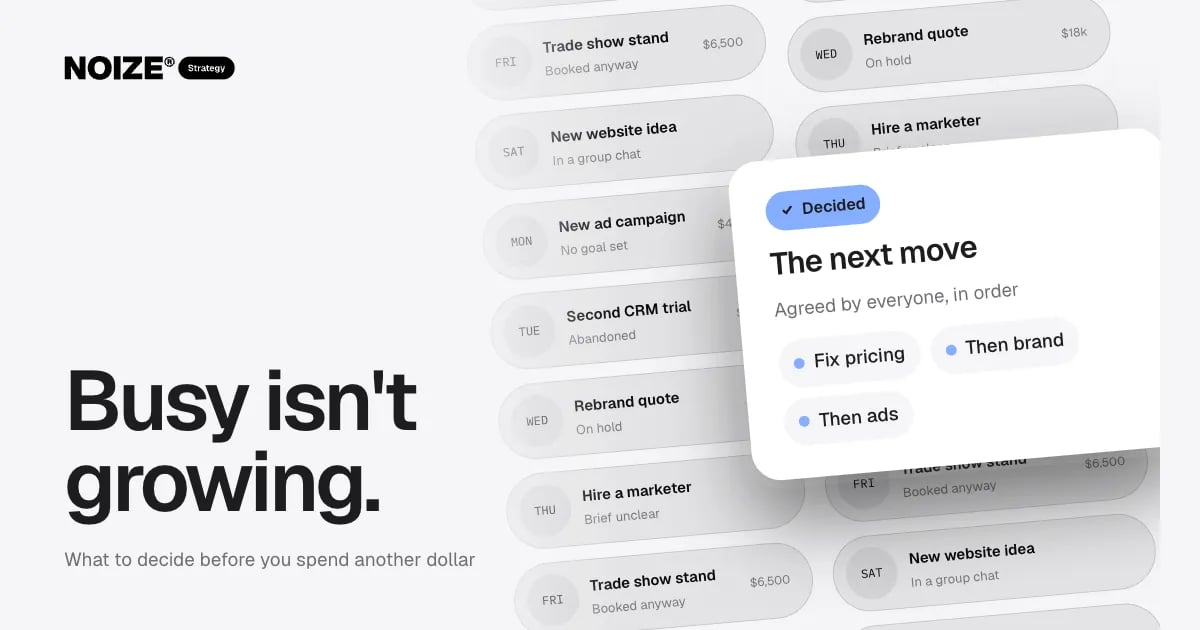
Growth has stalled and nobody agrees why. The calendar is full. The team is working hard. There is a new campaign running, a second CRM on trial, a rebrand quote on someone's desk and a trade show stand booked for spring. Everyone is busy. The numbers are flat.
This is one of the most common situations we see, and one of the most expensive. The business isn't short of effort. It is short of direction. And until the direction is agreed, every dollar spent is a bet placed by whoever asked for it most recently.
The short version
- Stalled growth is rarely fixed by more activity.
- It is fixed by a few clear decisions: what the business is trying to achieve, who it is for, what it should stop doing and what happens first.
- Make those decisions before the next spend, write them down and share them, and the same budget starts to move the business instead of keeping it busy.
Why busy feels like progress
Activity is visible. A new campaign, a new tool or a new hire is something you can point to. It feels like movement, and in a business under pressure that feeling is valuable.
The problem is that activity without direction tends to cancel itself out. The marketing pushes one offer while sales focuses on another. The website talks to a customer the business no longer wants. The new hire spends their first month working out what the priorities are. Each piece of work is reasonable. Together they pull in different directions.
The four signs a business is busy but not growing
01Every decision is urgent
When there is no agreed plan, everything competes for attention at once. The loudest problem wins, then the next one. Big decisions get made on the run because there is never a calm moment to make them properly.
02Spend follows suppliers, not priorities
Each supplier recommends more of what they sell. The ad agency suggests more ads. The developer suggests a new website. Without a plan to test those recommendations against, the budget drifts towards whoever pitches best.
03The team describes the business differently
Ask five people what the business does and who it is for, and you get five answers. That isn't a communication problem. It is a sign the direction was never settled.
04Results don't match the effort
Revenue is flat or margins are shrinking despite more work, more spend and more people. The effort is real. It just isn't aimed.
> I've taken thousands of sales calls with owners in exactly this spot. The giveaway is when I ask what they would stop doing tomorrow, and they can't answer. Every business has something to stop. Finding it is usually the fastest win in the room.
What to decide before you spend another dollar
01What success looks like in twelve months
Pick one or two outcomes that matter: revenue from a certain kind of customer, margin, a second location, a sale-ready business. Make them specific enough that you will know if you got there.
02Who the business is for
Name the best-fit customer precisely. Which customers are most profitable, easiest to serve and most likely to refer? Those are the ones to grow. Everyone else is a distraction you can still serve, but shouldn't chase.
03What to stop
Every business has offers, channels or habits that cost more than they return. A discount that became the normal price. A service line that ties up the best people for little margin. A marketing channel nobody can measure. Stopping them frees budget and attention for what matters.
04What happens first
Put the remaining ideas in order. Some depend on others: the brand before the website, the sales process before the sales hire, the forecast before the funding application. Sequence them, cost them and give each one an owner.
How NOIZE Strategy approaches it
Every engagement starts with a conversation about where the business is, where it could go and what the next move should be. From there we assess the business using the Infin8 System: eight phases and sixty-four steps that look across strategy, brand, marketing, sales, operations, people, systems and finance.
The output is a prioritised, costed roadmap in plain English. It shows what to do this quarter, what waits and what to stop. It is short enough to use and specific enough to act on the following Monday.
“What I appreciated most was them pushing back when it mattered.”
What changes once the direction is clear
The first thing owners notice is calm. Decisions that used to take weeks of debate take an afternoon, because there is a plan to test them against. Suppliers get clearer briefs. The team stops asking which priority comes first.
The second thing is that the money goes further. Spend that used to be scattered across six initiatives goes into the two that matter. Results start to show because the effort is finally aimed in one direction.
Where Strategy hands over
A clear strategy makes every other department better. When the plan needs a brand that matches it, NOIZE Creative builds one around a real position. When it needs an audience, NOIZE Marketing brings the right people in. When the plan needs capital, Finance can present it to a lender with confidence. Start with the thinking, then add the rest when you need them. See strategy.noize.com.au, and how the departments connect at noize.com.au.
Where to start this week
Block out two hours without interruptions. Write down every initiative the business is currently spending money or time on. Next to each, write what it is meant to achieve and how you would know if it worked. Then mark the ones you would not start today if they weren't already running.
That list is usually revealing. Most owners find two or three initiatives that can stop immediately, and one or two that deserve far more attention than they are getting. It isn't a full strategy, but it is the first honest look at where the effort is going, and it makes the strategy conversation that follows much sharper.
If you would rather do it with someone who has seen hundreds of businesses in the same position, that is what the first strategy conversation is for.
Related reading
- How to become the obvious choice in a crowded market
- What a growth roadmap gives you, and the decisions it saves you from making twice
Common questions
Why has my business growth stalled?
Common causes include drifting towards less profitable customers, too many competing priorities, unclear positioning, and spend that follows supplier recommendations rather than a plan. A strategy review usually finds two or three root causes.
Should I spend more on marketing to restart growth?
Not until the direction is clear. More marketing into an unclear offer or a weak sales process usually makes the problem more expensive, not smaller.
How long does it take to set a clear direction?
A focused strategy engagement is measured in weeks. The aim is a roadmap you can act on quickly.
What does a growth strategy include?
The target outcome, the best-fit customer, positioning, what to stop, what happens first, how success is measured and who owns each step.
Can strategy help a small business?
Yes. Owner-led businesses often benefit most, because every decision the owner doesn't have to remake frees time for running the business.
What should I bring to a strategy conversation?
A rough sense of where the business is today, where you would like it to be, and the decisions that are currently stuck. Recent financials help but aren't essential for the first conversation.
Your first strategy conversation is on us.
Have a chatThe brand for business.