What a growth roadmap gives you, and the decisions it saves you from making twice
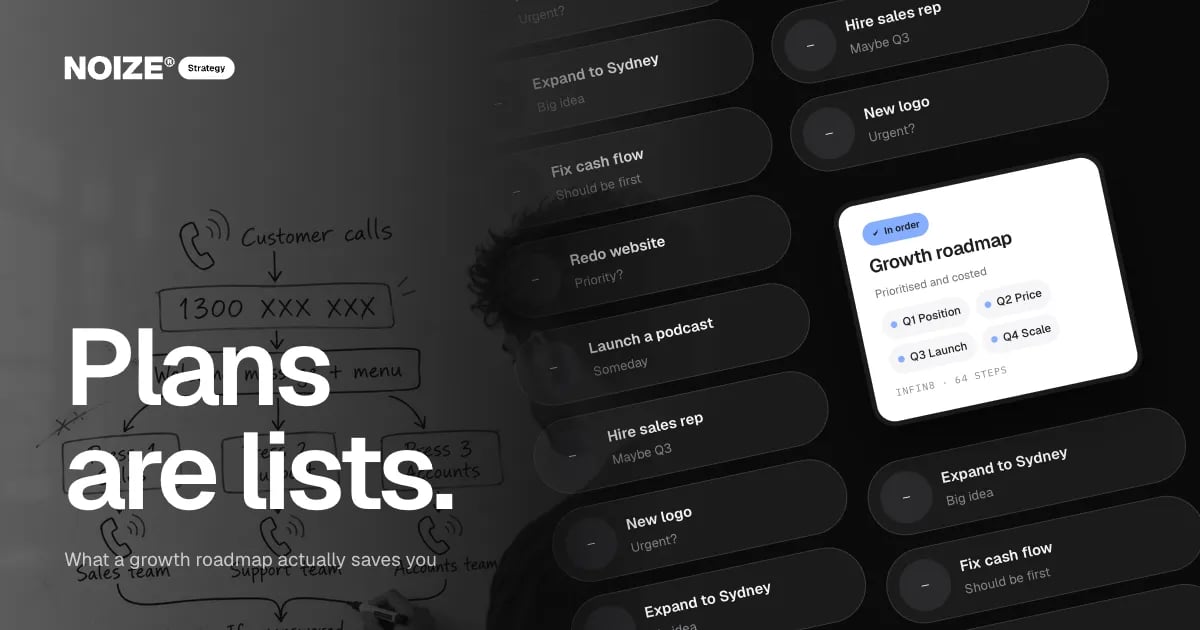
Every business has a list. Redo the website. Launch a podcast. Hire a salesperson. Refresh the logo. Expand to Sydney. Fix cash flow. The list grows every time someone has a good idea, and most of the ideas are good.
The problem isn't the ideas. It is that a list has no order. Without a sequence, the business tackles whatever feels most urgent this week, and many decisions get made twice: once in the wrong order, then again to fix it.
The short version
- A growth roadmap turns a list of ideas into a sequence.
- Each step is prioritised, costed and owned, with the dependencies between them made clear.
- That saves money on rework, saves time in meetings, keeps the team aligned and gives you checkpoints to see whether the plan is working.
- The Infin8 System produces exactly this: a plain-English roadmap covering the whole business.
Why lists fail
A list treats every item as equal. In reality, some items unlock others. A new website built before the brand is settled will be rebuilt within a year. A sales hire made before there is a sales process will struggle. An expansion funded before the forecast is ready is a guess.
When the list is worked through in whatever order feels right, the business pays for the same work twice. It also burns goodwill: the team sees projects start, stall and restart, and stops believing the next priority will stick.
What a roadmap actually gives you
01A clear first step
The most valuable line on any roadmap is the first one. It tells everyone what matters most right now, and by implication what doesn't. That alone ends a surprising number of circular conversations.
02The right order
A roadmap maps dependencies. Brand before website. Process before hires. Forecast before funding. Each step is placed where it makes the following steps cheaper and more likely to succeed.
03Costs you can plan for
Every step has an estimated cost and timeframe. That turns a wish list into a budget, and lets you see when each step will pay back. Owners can plan cash flow around the plan instead of reacting to each new invoice.
04Owners and dates
Each step is assigned to someone, inside or outside the business, with a date. Accountability stops being a vague hope and becomes a calendar.
05Checkpoints
A good roadmap includes the few numbers that show whether it is working: enquiries from the right customers, conversion, margin. Reviewing them quarterly means you can adjust early instead of discovering at year end that the plan drifted.
06Permission to say no
Perhaps the most underrated benefit. When a new idea arrives, it can be tested against the roadmap. Does it serve the current priority? If not, it waits. That protects focus without killing good ideas.
> I've co-founded companies and been through exits, and the buyers always asked the same question: what's the plan for the next three years? The businesses with a clear, costed roadmap had a far better conversation, and usually a better price.
The decisions it saves you making twice
Rebuilding a website because the brand changed six months later. Replacing a CRM because the sales process wasn't designed first. Re-hiring because the first person joined without a clear role. Re-applying for funding because the numbers weren't ready. Each of those is a decision made twice, and each costs time, money and morale.
A roadmap won't prevent every mistake. It prevents the predictable ones, which are most of them.
How the Infin8 System builds it
NOIZE Strategy builds every roadmap with the Infin8 System: eight phases and sixty-four steps that assess the business as a whole. The phases are INCUB8, CRE8, FABRIC8, ACCELER8, OPER8, MOTIV8, FACILIT8 and EVALU8. Together they cover direction, brand, systems, growth, operations, people, enablement and review.
The assessment shows where the business is strong, where it is exposed and which gaps hold the others back. The roadmap that follows is prioritised, costed and written in plain English. The roadmap is the product. You can deliver it with NOIZE departments, with your own team or with existing suppliers.
“Things really got moving beyond our expectations.”
Keeping a roadmap alive
A roadmap filed in a drawer is just a better-looking list. Keep it alive with a short monthly check on progress and a quarterly review of priorities. Update it when something significant changes: a new opportunity, a lost customer, a shift in the market. The structure stays; the details move.
An illustrative example
Picture a growing clinic group with three good ideas: a new website, a fourth location and a membership offer. Worked as a list, the website gets built first because the old one is embarrassing. Six months later the membership launches and the site has nowhere to sell it. The fourth location opens before the forecast shows it can be carried, and cash gets tight.
Worked as a roadmap, the order changes. The membership offer is designed first, because it changes pricing and cash flow. The website is built around it. The forecast then shows when the fourth location can be funded comfortably. Same three ideas, very different outcome, and no work done twice.
Where to start this week
Take your current list of ideas and, next to each, write what it depends on. You will quickly see that some items can't succeed until others are done. Those dependencies are the skeleton of a roadmap. Then circle the one item that would make the most other items easier. That is probably your first step.
From there, Strategy can help turn the skeleton into a full plan with costs, owners and checkpoints. When the roadmap calls for a new brand, NOIZE Creative picks it up. When it calls for an audience, NOIZE Marketing does. See strategy.noize.com.au.
Questions to ask before you start
Ask which idea on the list unlocks the most others. Ask what would happen if you did nothing on each item for six months. Ask which items depend on money you don't yet have. Ask who would own each step. Ask what you will stop doing to make room. The answers turn a list into a sequence.
Related reading
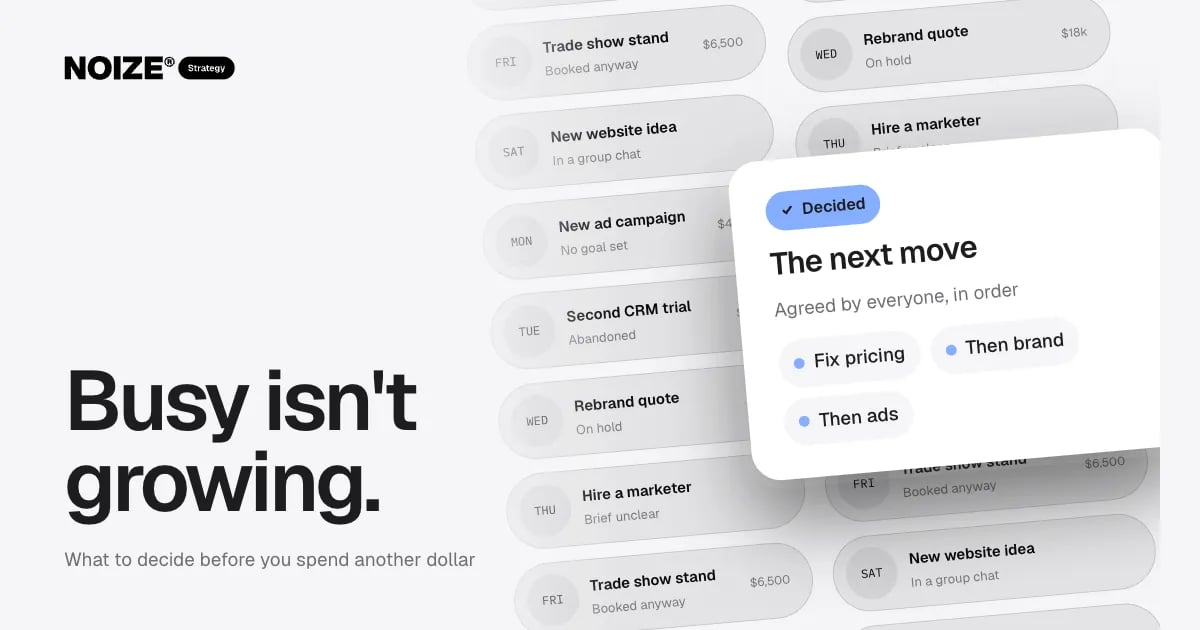
- Why busy businesses stall, and what to decide before you spend another dollar
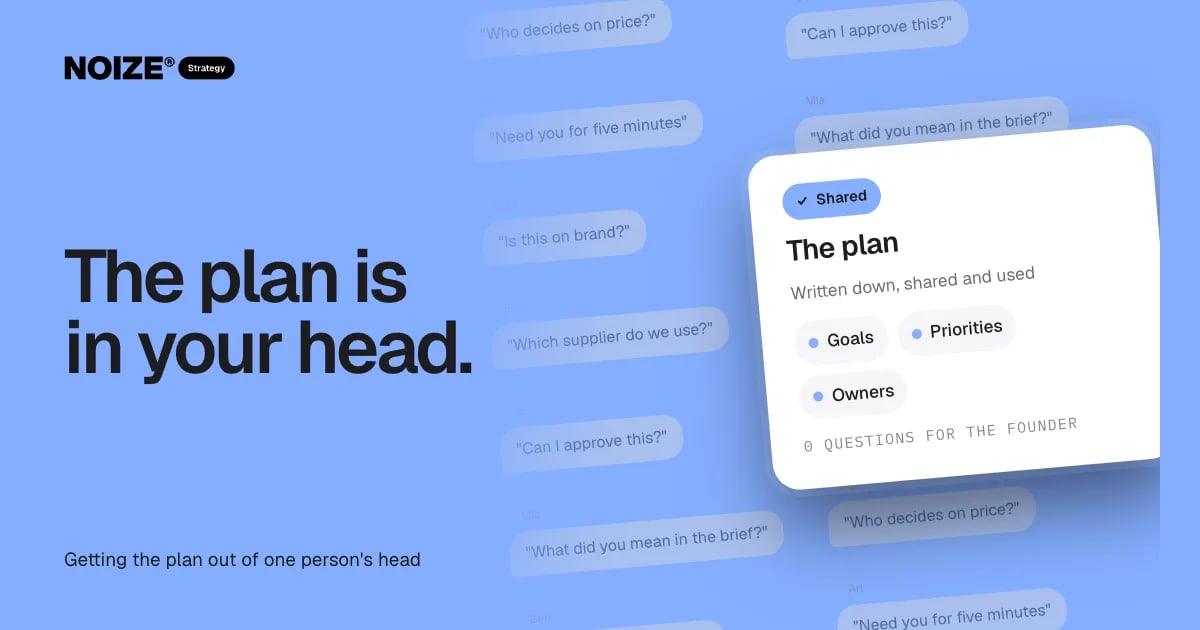
- Getting the plan out of one person's head
Common questions
What is a growth roadmap?
A prioritised, sequenced and costed plan of the steps a business will take to reach its goals, with owners and checkpoints for each.
How is a roadmap different from a business plan?
A business plan often describes the business and its market. A roadmap focuses on the specific actions to take, in what order, at what cost.
How far ahead should a roadmap look?
Usually twelve to twenty-four months in detail, with a lighter view of the years beyond.
What is the Infin8 System?
NOIZE's method for assessing a whole business across eight phases and sixty-four steps, producing a plain-English roadmap.
Can I use the roadmap without NOIZE?
Yes. The roadmap is yours, and you can deliver it however suits the business.
How often should the roadmap be reviewed?
Progress monthly, priorities quarterly, and whenever something significant changes.
Your first strategy conversation is on us.
Have a chatThe brand for business.