From plan to funded: how Strategy and Finance turn ambition into a use of funds
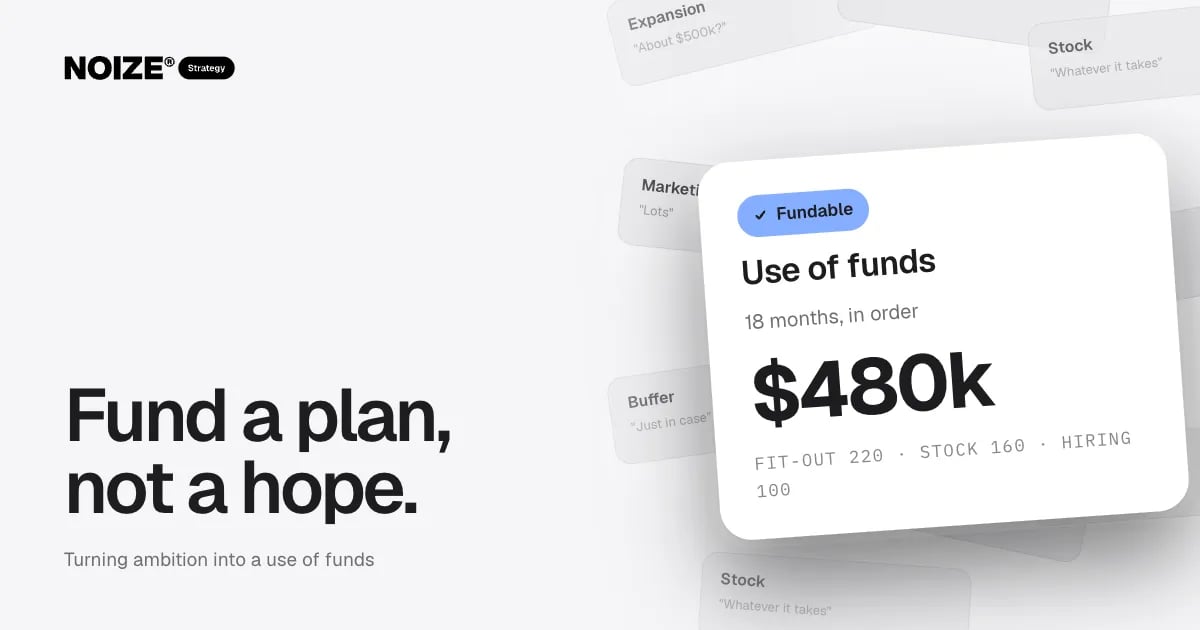
"We need about $500k for expansion." It is one of the most common sentences in a funding conversation, and one of the least convincing. What expansion? Spent on what, when, and returning what? Without those answers, a lender sees risk and an investor sees a guess.
Ambition isn't the problem. Most owners who ask for capital have a good reason. The gap is between the ambition in their head and a plan on paper that someone else can assess. Closing that gap is where Strategy and Finance work together.
The short version
- Capital is easier to raise, and safer to take on, when it is attached to a clear plan.
- Strategy defines the direction and the steps.
- The plan becomes a use of funds: exactly what the money is for, how much each part costs, when it is needed and what it returns.
- Accounting proves the numbers add up.
- Finance matches the right funding to the plan.
- The result is a stronger application and money that actually moves the business forward.
Why vague plans struggle
A lender's first job is to judge whether they can be repaid. An investor's is to judge whether the money will grow. Both need to see where the money goes and how it produces results. A round number attached to the word "growth" doesn't give them that.
Vague plans also cause problems after the money arrives. Without a clear use of funds, capital gets spread across whatever feels urgent. Some of it does real work. Some of it disappears into day-to-day costs. Twelve months later, the business has a loan and not much to show for it.
From ambition to use of funds
01Start with the outcome
What will be different when the money has done its job? A second location trading profitably. Capacity to fill a contract. A product range launched nationally. The outcome defines everything else.
02List the steps to get there
Break the outcome into the actions it requires: fit-out, equipment, stock, hires, marketing, systems. This is the strategy turned into a sequence.
03Cost each step
Put a realistic cost against every step, with quotes where possible. This is often where the number changes, sometimes up, often down.
04Phase the spend
Not everything needs funding on day one. A phased plan shows when each part of the money is needed. That can reduce the facility required, reduce funding costs and make the application stronger.
05Show the return
Link each step to its expected result: revenue, margin, capacity or savings. Accounting builds the forecast that shows how the business services the funding and when the investment pays back.
06Define the checkpoints
Agree the measures that show the plan is on track. Lenders and investors take comfort from a business that knows how it will judge its own progress.
> I've invested in dozens of ventures, and the pitches I backed weren't the most exciting. They were the ones where the founder could tell me, line by line, where my money would go and what each line would produce. Clarity is the strongest signal of a founder who will spend well.
How Strategy and Finance work together
At NOIZE, the hand-off runs in both directions. Strategy builds the plan and the use of funds. Finance tests it against what lenders and investors will back, and matches it to the right type of capital: business loans, working capital, growth capital, equipment finance or private lending.
When Finance finds that the plan needs sharpening, it hands back to Strategy. That loop is why the final application is stronger than either team could produce alone.
Accounting and Books play their part too, preparing statements and forecasts so the numbers behind the plan are current and consistent.
“Things really got moving beyond our expectations.”
An illustrative example
Consider a manufacturer asking for "around half a million" to grow. Working through the use of funds, the plan becomes three phases: new equipment to lift capacity, then working capital for the larger orders it enables, then two hires once volume is proven. The equipment is better suited to asset finance. The working capital can be a facility drawn as needed. The hires can be funded from the new margin. The total borrowed upfront falls, the terms improve, and every dollar has a job.
What lenders and investors look for
Most lenders want to see four things: a clear purpose for the money, current and accurate financials, evidence the business can service the repayments and some form of security or track record. Investors look for a credible plan, a strong team, a clear market and a sensible use of their capital. In both cases, the plan and the numbers need to tell the same story.
When Strategy and Finance work together, they do. The roadmap explains what will happen and why. The use of funds shows where every dollar goes. Accounting's forecast proves the business can carry it. Finance presents the package to the right lender or investor in the language they expect.
The cost of getting it wrong
Borrowing without a clear plan creates two risks. The first is borrowing the wrong amount: too little to finish the job, or too much and paying for capital that sits idle. The second is using the wrong type of funding: short-term money for long-term assets, or expensive private funding when a cheaper option would have suited. Both are avoidable with a properly built use of funds.
Where to start this week
Write one sentence describing what the money will achieve. Then list every item it will be spent on, with your best estimate of cost and timing. Wherever you write "about" or "roughly", that is a line to firm up. The list you end up with is the beginning of a use of funds, and the starting point for both a strategy and a funding conversation. See strategy.noize.com.au and finance.noize.com.au.
Questions to ask before you start
Ask what outcome the money must produce, and by when. Ask which costs are certain and which are estimates. Ask whether the spend can be phased. Ask how repayments will be met if growth is slower than planned. Ask what the business would do without the funding. The answers make the case for capital far stronger.
Once the use of funds is clear, package it with the numbers in one organised funding pack, cover page first, so your broker has everything in one place.
Related reading
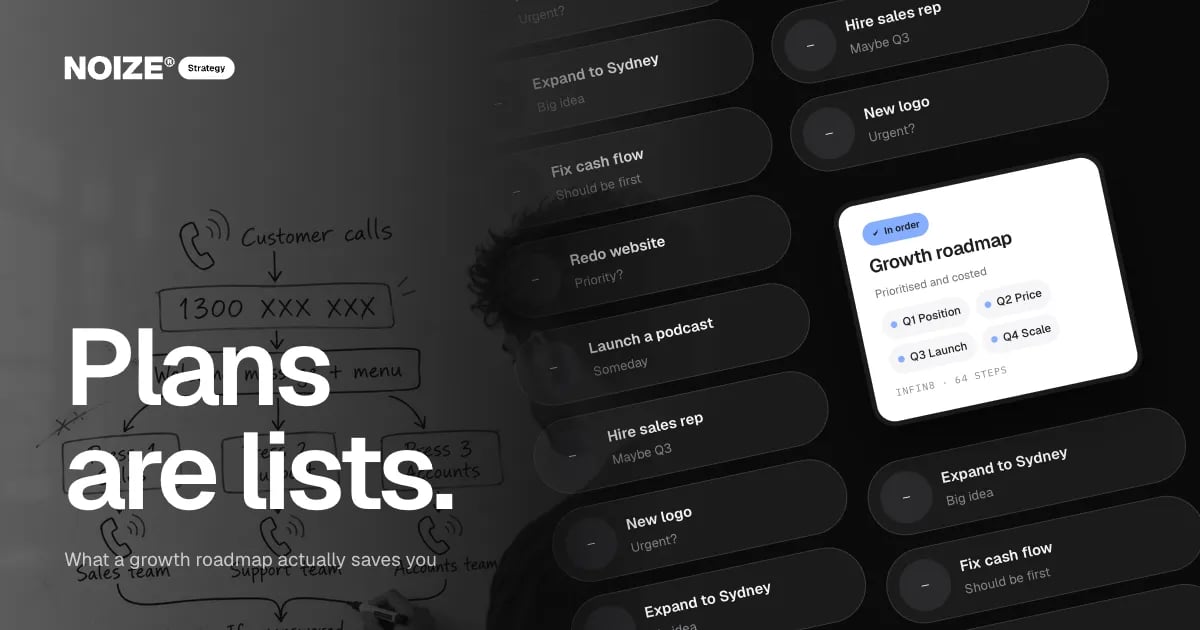
- What a growth roadmap gives you, and the decisions it saves you from making twice
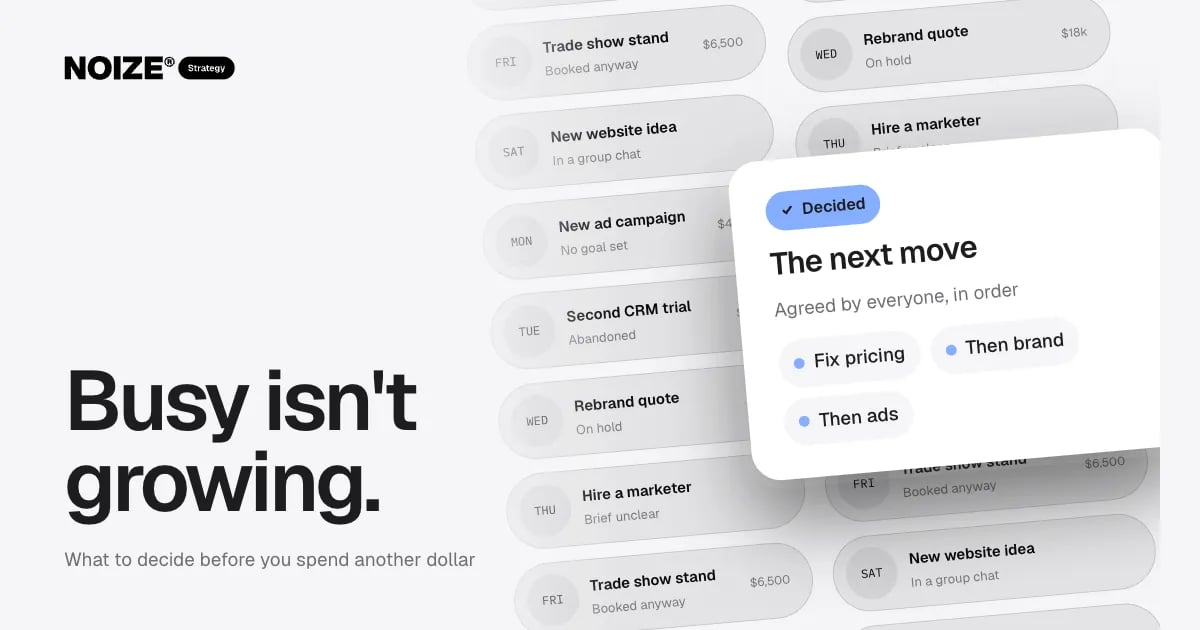
- Why busy businesses stall, and what to decide before you spend another dollar
Common questions
What is a use of funds?
A breakdown of exactly what borrowed or raised money will be spent on, how much each item costs, when it is needed and what it is expected to return.
Do lenders really need a business plan?
Most want to see a clear purpose, current financials and evidence the business can repay. A costed plan makes all three easier to show.
What is investor readiness?
Having the plan, financials, structure and story in order so the business can respond quickly to investors.
Can strategy reduce how much I need to borrow?
Often. Phasing spend and matching each item to the right funding type can lower the amount needed upfront.
Who prepares the forecast?
NOIZE Accounting, working from current records kept by Books.
What if the plan isn't fundable?
Finance will say so and explain why, and Strategy can help reshape it into something that is.
Your first strategy conversation is on us.
Have a chatThe brand for business.