Decide it before you design it: why brand strategy comes before the logo
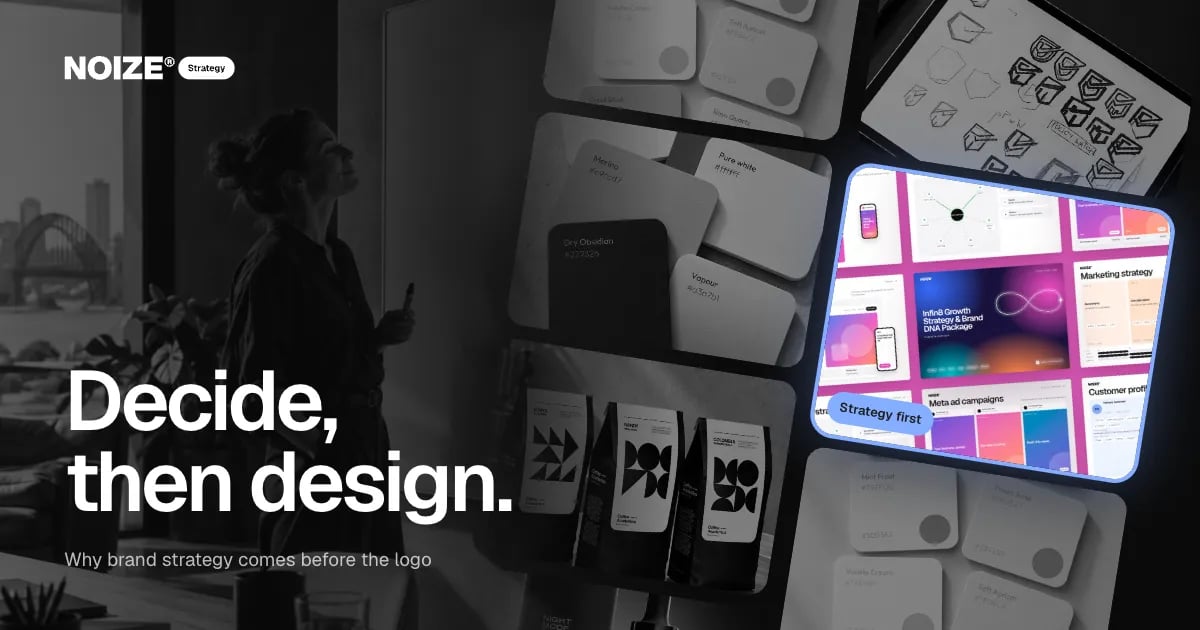
A business decides it needs a new logo. It briefs a designer, reviews three concepts, picks one, and six months later still feels the brand isn't right. The logo looks fine. The problem is that nobody decided what it was meant to say.
This happens constantly, and it is expensive. Design is the visible part of a brand, so it is tempting to start there. But a brand is a set of decisions first and a set of visuals second. Make the decisions, and the design has something to express. Skip them, and the design is decoration.
The short version
- Brand strategy settles who the business is for, what it stands for, how it is positioned, what it promises and how it sounds.
- Creative then turns those decisions into a name, identity and voice.
- Doing it in that order shortens design rounds, avoids rebrands that miss, and produces a brand that looks right because it is right.
- At NOIZE, Strategy hands a clear brief to Creative so the identity lands the first time.
Why starting with the logo goes wrong
01Feedback becomes taste
Without agreed strategy, design feedback turns into personal preference. "I don't like green." "Can it be bolder?" Every round reflects whoever spoke last, and the brand drifts towards a committee compromise that excites nobody.
02The brand fits the founder, not the customer
Owners naturally choose what they like. The customer, the person the brand is meant to attract, is rarely in the room. Strategy brings them in through research and positioning.
03It looks like the category
Without a clear position, designers default to what the industry looks like: blue for finance, green for health, a swoosh for anything forward-looking. The new brand looks professional and identical to competitors.
04The rebrand needs a rebrand
When the business later clarifies its direction, the brand no longer fits, and the work is repeated. The second rebrand is often the first one done properly.
What brand strategy decides
- The audience. Who the brand is for, specifically, and what matters to them.
- The position. Where the business stands relative to competitors, and why customers should choose it.
- The promise. What the business commits to deliver, in one clear line.
- The personality. How the brand behaves: confident or warm, precise or playful, premium or accessible.
- The message. The core story and the few things every piece of communication should reinforce.
- The offer. What the business leads with, so the brand supports what actually sells.
> I've built ecommerce brands where we spent more time on the strategy page than the logo, and it showed in the results. When the designer knew exactly who the customer was and what we promised them, the first concept was usually close. Without that, we'd still be on round nine.
What Strategy hands to Creative
At NOIZE, the hand-off from Strategy to Creative is a defined step, not a meeting. Creative receives a written brief covering audience, position, promise, personality, key messages and the commercial goals the brand must support. It also includes what competitors look and sound like, so the identity can deliberately stand apart.
With that brief, design rounds become focused. Feedback is tested against the strategy, not taste. "Does this feel premium enough for the customer we defined?" is a question with an answer. "Do we like it?" isn't.
“These guys absolutely nailed our re-branding concept.”
An illustrative example
Imagine a property business ready to rebrand. Started with design, it would likely end up with a sleek blue mark and the word "trusted" somewhere. Started with strategy, the team might discover its best clients are investors buying their third or fourth property, who value data and speed over hand-holding. The position becomes sharper, the promise becomes specific, and the identity can be bold, analytical and unmistakably different from the agencies around it.
Same budget, same designers. Very different brand, because the decisions came first.
What happens after the brand
Once the strategy and identity are set, the rest of the business can build on them. Print rolls the brand out to signage, cards and uniforms. Digital builds the website around it. Marketing takes it to the audience the strategy defined. Each department works from the same brief, so the brand stays consistent everywhere it appears.
Signs your brand needs strategy, not just design
You have been through more than one round of logo concepts and none feel right. Different people in the business want the brand to say different things. The brand looks fine but doesn't seem to attract the customers you want. Competitors with weaker offers look more convincing. Or the business has changed direction and the brand hasn't caught up.
Each of these points to undecided strategy rather than poor design. More concepts won't solve it. A clear decision about audience, position and promise will, and it usually makes the design work that follows faster and cheaper.
What a strategy-led brand gives you
A strategy-led brand is easier to defend internally, because every choice links back to a decision the business made. It is easier to extend, because new materials can be tested against the same brief. And it lasts longer, because it was built around where the business is going rather than a passing visual trend. That longevity is where most of the value sits: a brand that doesn't need redoing in two years.
Where to start this week
Before briefing any designer, write down answers to five questions: who is this brand for, what do they value most, why should they choose us over the next option, what one promise can we keep every time, and how should we sound? If any answer is vague or contested inside the business, that is where strategy should start. See strategy.noize.com.au and creative.noize.com.au.
Questions to ask before you start
Ask who the brand must attract and who it can afford to lose. Ask what competitors look and sound like, so you can stand apart. Ask what you want customers to feel after every interaction. Ask what the business will be selling in three years. Ask which existing assets customers already recognise. The answers become the creative brief.
Related reading
- How to become the obvious choice in a crowded market
- What a growth roadmap gives you, and the decisions it saves you from making twice
Common questions
What is the difference between brand strategy and brand identity?
Brand strategy is the set of decisions about audience, position, promise and personality. Brand identity is the visual and verbal expression of those decisions: logo, colour, type, imagery and voice.
Do I need brand strategy for a small rebrand?
Even a refresh benefits from a short strategy step, so the changes move the brand in a deliberate direction.
How long does brand strategy take?
Typically weeks, depending on research and the number of stakeholders.
Can you design a logo without strategy?
It is possible, but the result is more likely to look like competitors and need redoing later.
Who should be involved in brand strategy?
The owner or leadership team, people who speak to customers, and ideally some customers themselves.
What does Creative receive from Strategy?
A written brief covering audience, position, promise, personality, key messages, commercial goals and competitor context.
Your first strategy conversation is on us.
Have a chatThe brand for business.